
The reduction of green house gas emissions is one of the big global challenges for the next decades. (Linked) Open Data on this multi-domain challenge is key for addressing the issues in policy, construction, energy efficiency, production a like. Today – on the World Environment Day 2014 – a new (linked open) data initiative contributes to this effort: GBPN’s Data Endpoint for Building Energy Performance Scenarios.
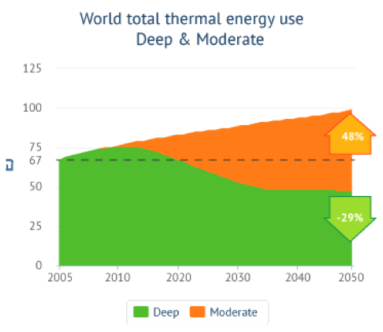 GBPN (The Global Buildings Performance Network) provides the full data set on a recently made global scenario analysis for saving energy in the building sector worldwide, projected from 2005 to 2050. The multidimensional dataset includes parameters like housing types, building vintages and energy uses – for various climate zones and regions and is freely available for full use and re-use as open data under CC-BY 3.0 France license.
To explore this easily, the Semantic Web Company has developed an interactive query / filtering tool which allows to create graphs and tables in slicing this multidimensional data cube. Chosen results can be exported as open data in the open formats: RDF and CSV and also queried via a provided SPARQL endpoint (a semantic web based data API). A built-in query-builder makes the use as well as the learning and understanding of SPARQL easy – for advanced users as well as also for non-experts or beginners.
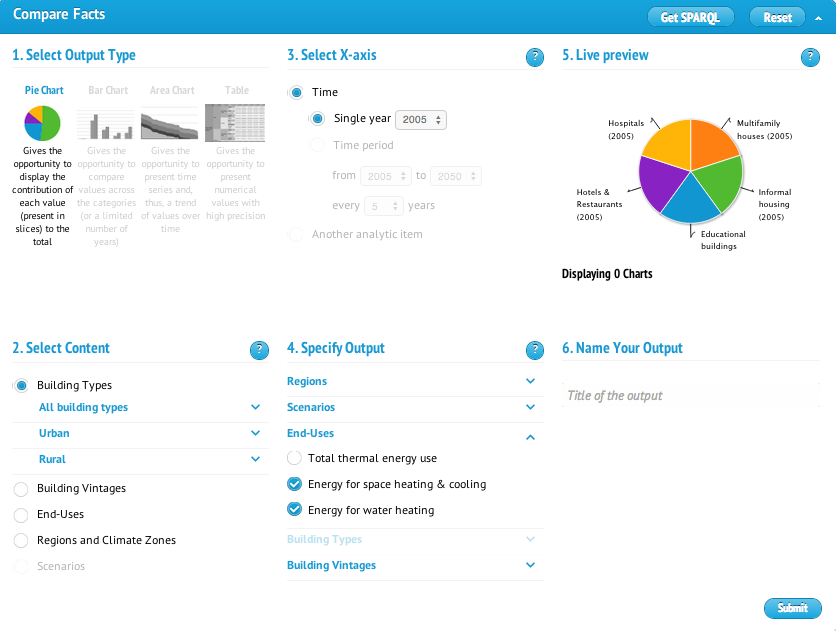
The LOD based information- & data system is part of Semantic Web Companies’ recent Poolparty Semantic Drupal developments and is based on OpenLinks Virtuoso 7 QuadStore holding and calculating ~235 million triples as well as it makes use of the RDF ETL Tool: UnifiedViews as well as D2R Server for RDF conversion. The underlying GBPN ontology runs on PoolParty 4.2 and serves also a powerful domain-specific news aggregator realized with SWC’s sOnr webminer.
 Together with other Energy Efficiency related Linked Open Data Initiatives like REEEP, NREL, BPIE and others, GBPNs recent initative is a contribution towards a broader availability of data supporting action agains global warming – as also Dr. Peter Graham, Executive Director of GBPN emphasized “…data and modelling of building energy use has long been difficult or expensive to access – yet it is critical to policy development and investment in low-energy buildings. With the release of the BEPS open data model, GBPN are providing free access to the world’s best aggregated data analyses on building energy performance.”
The Linked Open Data (LOD) is modelled using the RDF Data Cube Vocabulary (that is a W3C recommendation) including 17 dimensions in the cube. In total there are 235 million triples available in RDF including links to DBpedia and Geonames – linking the indicators: years – climate zones – regions and building types as well as user scenarios….
